Sleeping Mask Private Label: Formats B2B Buyers Actually Reorder
The overnight segment has quietly become one of the most repeat-ordered categories in the mask market, and a well-built sleeping mask private label program is what separates a one-time test order from a standing monthly reorder. For brand owners, distributors, spa chains, and Amazon or TikTok resellers, the appeal is practical: the format sits between a rinse-off treatment and a leave-on cream, so it fits evening routines without extra steps. That convenience translates into higher repurchase intent, which is exactly what a B2B buyer needs to justify a custom production line. In this guide we break down the jar, pouch, and sachet formats that actually drive reorders, the formulation choices behind them, and the manufacturing checkpoints you should verify before signing. Whether you are launching a first SKU or extending an existing mask range, the right format decision protects both your margin and your launch timeline.
Why a Sleeping Mask Private Label Line Wins Repeat Orders
A sleeping mask private label line earns reorders because the product is consumed on a predictable cadence. Unlike a weekly sheet mask that competes with dozens of alternatives on a shelf, an overnight mask is usually a single hero product in a bedtime regimen, which means the buyer controls the repurchase cycle. From a manufacturing standpoint, that predictability is valuable: it lets the factory plan batch sizes, stabilize ingredient sourcing, and keep lead times short. We typically see reorder patterns strengthen when the MOQ is kept Flexible / Customizable, because a distributor can start with a modest first run, validate the market, then scale without renegotiating the entire contract. The format also pairs naturally with premium positioning — a jar or a foil sachet reads as a treatment, not a commodity — so the perceived value supports healthier per-unit pricing. If you are comparing build models, our breakdown of OEM vs ODM face masks helps you decide how much formulation control you want before committing.
Key Formulation Considerations for Overnight Masks
The technical brief for an overnight mask is different from a rinse-off format. You want a lightweight gel or cream-gel that forms a soft, breathable film, cushions moisture, and does not transfer onto pillows. Avoid heavy occlusives that feel greasy by morning. Common active directions that stay within cosmetic claims include hydration support from hyaluronic acid, a calming feel from Centella or panthenol, and a refreshed appearance from niacinamide. We covered hyaluronic acid sheet masks in depth elsewhere, and many of the same humectant strategies apply to overnight formats — the difference is the delivery system and the wear time. Keep the pH skin-friendly, minimize fragrance if the target market is sensitive-skin oriented, and document every ingredient with a corresponding MSDS and COA. A clean, well-documented formulation brief is what lets a factory turn a sample around in 3–7 days instead of stalling in regulatory review. Stability testing across temperature bands is also worth requesting before bulk production, since overnight products sit on a shelf and then on a nightstand for weeks at a time.
Texture is the second half of the brief. A sleeping mask should feel weightless yet substantial enough that the user notices a cushioning layer before bed. Film-formers such as pullulan or low-weight polysaccharides give that “second skin” sensation without tightness, while esters and squalane contribute slip and a soft after-feel. We recommend a phased claim plan: start with hydration and a refreshed look, then expand toward a smoother-feel story once stability and sensory data are locked. This keeps the dossier defensible and avoids overreaching language that a compliance reviewer will flag.
Packaging Formats That Drive Reorders
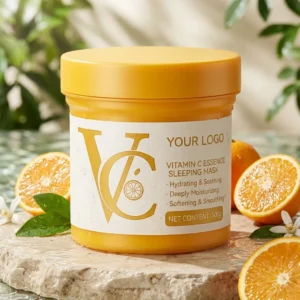
Format choice is where many private label programs win or lose. The three formats that consistently generate reorders are the jar, the single-use sachet, and the tube. A jar signals a premium treatment and encourages larger per-order volumes, but it demands a robust preservative system and a wider opening that some buyers find less hygienic. Single-use sachets solve hygiene and travel appeal, fit subscription boxes, and reduce wasted product — but they raise unit packaging cost and require pouch or foil sourcing. Tubes sit in the middle: easy to dispense, lower cost per gram than jars, and friendly to gel textures. Our face mask packaging customization guide walks through pouch, jar, and carton options in more detail, but for overnight masks specifically, we recommend aligning the format to the channel: jars for spa and retail, sachets for sampling and e-commerce bundles, tubes for everyday replenishment. The packaging decision also affects your MOQ, since each format carries its own tooling and minimum print run.
Beyond the primary container, the outer carton and the insert matter more than many first-time buyers expect. A sleep-themed carton with clear usage direction reduces returns and support tickets, and a multilingual insert opens export channels without a second production line. If you plan to sell across climates, specify a secondary seal or desiccant for jar formats so the texture survives transit. These small choices are what separate a product that gets reordered from one that sits in a warehouse.
How to Evaluate a Sleeping Mask Private Label Partner
Choosing the right factory is the part of a sleeping mask private label program that protects you long after launch. Start with certifications: ISO 22716 and GMPC are the baseline for cosmetic GMP, and you should be able to request the valid certificate rather than take a claim at face value. Our ISO 22716 factory standards guide explains exactly what to verify before you place a deposit. Next, review the formulation lab’s track record with overnight and leave-on formats — a sheet mask specialist is not automatically a sleeping mask specialist. Ask for stability and compatibility data, confirm batch-to-batch documentation (MSDS, COA per lot), and clarify that MOQ stays Flexible / Customizable as you scale. Sampling speed is a practical signal: a capable partner returns a revised sample within a week. If you are also exploring other overnight trends, our bio-collagen overnight masks trends piece shows how a single active story can be extended across formats. Keep the audit checklist short and document every answer so your reorder conversations start from evidence, not memory.
A second evaluation axis is communication and change control. A factory that version-controls its formulas and sends a revised spec sheet with every sample is far easier to scale with than one that “just mixes it again.” Insist on a signed specification for the approved sample, including viscosity, pH, appearance, and preservative system, so bulk production matches what you approved. This single habit prevents the majority of quality complaints that erode reorder confidence.
Common Questions (FAQ)
Q1: What is the typical MOQ for sleeping mask private label?
A: Flexible / Customizable — confirmed after formula, packaging, and order plan review. We structure first runs to let you validate demand before scaling.
Q2: How long does sampling and production take?
A: Sampling is typically within 3–7 days; bulk production runs 7–15 days depending on customization level and packaging format.
Q3: Which certifications should I verify before ordering?
A: ISO 22716, GMPC, and GMP are the baseline; MSDS and COA are provided per batch. Request the valid certificates directly from the factory.
Q4: Can I combine a sleeping mask with my existing sheet mask line?
A: Yes. Many brands extend a hero ingredient story — for example hyaluronic acid or Centella — across both rinse-off and leave-on formats to simplify sourcing and marketing. Compare format trade-offs in our sheet mask vs hydrogel guide.
Get a Quote / Request Samples
Ready to build a sleeping mask private label line that your buyers actually reorder? Our team handles formulation, packaging customization, and full documentation under Flexible / Customizable MOQ, with sampling in 3–7 days. Tell us your target channel, preferred format, and hero ingredient, and we will return a tailored proposal. Reach our team through the contact page to request samples, or explore our private label services to see how the program fits your brand. You can also browse the blog for more formulation and sourcing guides before you brief the factory.
Meta: focus keyword set | words ≥ 1200 | internal links within 5–8 | keyword occurrences 6–10