Choosing the right collagen mask manufacturer is one of the most consequential sourcing decisions a private label skincare brand makes in 2026. Collagen-based face masks sit at the intersection of two strong retail trends — ingredient-led skincare and the “glass skin” hydration craze — which makes them a dependable reorder item for distributors, spa chains, and Amazon sellers alike. A capable collagen mask manufacturer can build a base that signals “hydration” and “skin comfort” without crossing into clinical claims, keeping the product compliant across strict markets such as the EU and parts of Asia. This guide walks B2B buyers through the formulation and base options a qualified partner should offer, from bio-collagen films to hydrogel sheets, and explains how to evaluate a production line before you commit. By the end you will know which base fits your brand positioning, what documentation to request, and how to keep minimum order quantities flexible as you scale.
Why Collagen Masks Keep Reordering in the B2B Skincare Market
Collagen masks have moved from a sporadic spa treatment to a staple category on most B2B reorder lists, and the reason is structural rather than seasonal. The ingredient communicates “hydration” and “skin comfort” in a way that needs no functional wording, which keeps the product inside cosmetic-law boundaries while still reading as a premium active. For a brand owner, that compliance margin is what protects shelf life in regulated channels.
The commercial upside is the reorder rhythm. Sheet and hydrogel formats are single-use, low-commitment products that end users repurchase frequently, and that frequency translates into predictable repeat orders for the distributor. A collagen mask manufacturer that can also handle private label packaging and formula tweaks lets the same collagen line serve multiple sales channels — salon, retail, and e-commerce — without re-tooling the factory. When the base, essence, and carton all come from one accountable source, the buyer avoids the version-drift that happens when packaging and formula are split across vendors.
The first question a collagen mask manufacturer should answer is not “what is your unit price” but “which base fits my positioning.” Buyers who skip that step often end up with a sheet that feels generic and a serum that separates in transit. The sections below map the two dominant bases and the customization levers that turn a commodity mask into a branded SKU.
For teams still deciding between build models, our OEM vs ODM face masks guide explains where formula ownership sits and how that choice affects lead time on a collagen line.
Bio-Collagen vs Hydrogel Base: Formulation Differences Buyers Should Know
The base you choose determines texture, cost, and perceived value, so it deserves a dedicated conversation when you brief your collagen mask manufacturer on base choice. The two bases most B2B buyers compare are bio-collagen film and hydrogel, and they behave very differently on the skin.
Bio-collagen uses a micro-fiber or bio-cellulose sheet that hugs the contours of the face and releases serum slowly. Buyers often choose it for premium positioning because the film looks and feels high-tech, and the slow release supports a “treatment” story rather than a quick splash of essence. Our bio-cellulose sheet mask manufacturer guide covers the material, cost, and formulation trade-offs in detail if you want to compare it against standard non-woven sheets.
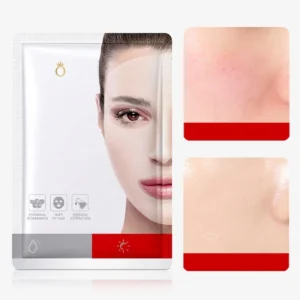
Hydrogel, by contrast, is a gel matrix rather than a woven sheet. It tends to feel cooler and more cushiony, which suits after-sun or post-treatment routines where a “soothing” narrative sells. A hydrogel face mask OEM can cast the mask into a single piece or a two-piece format, and the gel can carry a higher load of essence per gram than a traditional sheet. That higher essence load is why hydrogel often commands a better retail margin even at a higher production cost.
A third option some buyers overlook is the bio-collagen overnight format, which uses a leave-on film designed for bedtime use rather than a rinse-off step. Our 2026 bio-collagen overnight trends breakdown explains why overnight masks are climbing reorder lists this year and where they fit in a brand’s weekly regimen. For collagen specifically, an overnight film lets the brand tell a “while you sleep” story that a standard sheet cannot.
Customizing the Formula and Packaging With Your Manufacturer
Customization is where a collagen mask manufacturer earns its margin and your brand earns its differentiation. The formulation layer typically covers three levers: the collagen source, the supporting actives, and the essence clarity and fragrance profile.
The collagen source is the headline decision. Marine-derived, plant-derived, and recombinant options each carry a different story and a different documentation trail, and the choice should match your label claims rather than your supplier’s cheapest inventory. Supporting actives such as glycerin or low-molecular humectants change the after-feel, while essence clarity and fragrance determine whether the product reads clinical or spa-like on the shelf.
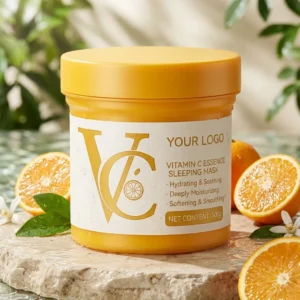
On packaging, the default for sheet and hydrogel masks is the foil sachet, but jars, tubes, and cartons are all viable depending on the retail environment. Our face mask packaging customization guide walks through pouch, jar, and carton options that affect both shelf appeal and shipping cost. For collagen lines aimed at spa channels, a premium carton with one sachet per slot often reads as more luxurious than a bulk multi-pack, and the per-slot format also reduces returns from damaged films.
MOQ on a custom collagen line should be Flexible / Customizable. A good partner quotes after reviewing your formula complexity, packaging choice, and rollout plan rather than quoting a rigid number upfront. That flexibility matters for startups testing a new SKU and for established brands adding a seasonal collagen variant without committing to a year of inventory.
How to Vet a Collagen Mask Production Partner
Before you sign, the same factory-audit checklist that applies to any mask category applies here, and a collagen mask manufacturer should pass it without hesitation. Ask for ISO 22716 and GMPC documentation, and confirm batch-level MSDS and COA are available on request. Our face mask factory audit guide lists the on-site checks that separate a real production floor from a trading company with a logo and a photocopier.
Certification depth is the second filter. Our ISO 22716 mask factory standards explainer details what each certificate actually verifies, so you can tell a genuine compliant line from a badge that was emailed instead of earned. For brands targeting clean-beauty shelves, our vegan face mask manufacturer compliance note covers the documentation needed when plant-derived or recombinant alternatives are part of the claim, which is increasingly common as “vegan collagen” enters the catalog.
Sampling is the final gate. A trustworthy partner returns a benchmark sample within a few days and itemizes what changed versus your reference mask, including serum viscosity, film weight, and essence volume. That transparency is more valuable than a low unit price, because it protects your formula integrity across reorders and keeps the end-user experience identical from the first container to the ten-thousandth.
Common Questions (FAQ)
Q1: What is the typical MOQ for a private label collagen mask?
A: Flexible / Customizable — confirmed after formula, packaging, and order plan review. Most partners set the number once they understand your sachet size and essence volume, not before.
Q2: How long does sampling and production take?
A: Sampling is typically within 3–7 days; bulk production runs 7–15 days depending on customization and base type. Hydrogel casting can add a short step versus a standard sheet line, but the margin usually justifies it.
Q3: Which certifications should I verify before ordering?
A: ISO 22716, GMPC, and GMP as baseline, with MSDS and COA provided per batch. Request the originals, not screenshots, and confirm they match the exact formula you will produce.
Q4: Can a collagen mask be vegan or clean-beauty positioned?
A: Yes — plant-derived or recombinant collagen alternatives let you build a vegan line, provided the supporting actives and preservatives also meet your clean-beauty standard. Document the full INCI list so the claim survives a retailer audit.
Get a Quote / Request Samples
Ready to build your collagen line? Talk to a collagen mask manufacturer who can show you bio-collagen and hydrogel bases side by side, share batch documentation, and quote a Flexible / Customizable MOQ that fits your launch plan. Request samples, compare the serum release and facial fit, and get a custom quote tailored to your packaging and sales channel. Contact our team to start the briefing and receive a benchmark sample matched to your reference mask.