Private Label Clay Mask: Formulation, Packaging, and Private Label Options for Buyers
Clay masks occupy a specific corner of the skincare market that sheet, hydrogel, and sleeping formats never really replace. They absorb oil, they dry down matte, and buyers keep reordering them because the ritual is repeatable and the shelf position is different from everything else in a range. If you are sourcing clay-based products, the questions are predictable: which clay system, how much active can you load, what jar or tube format carries it, and what MOQ does a first run look like. This guide covers what a capable clay mask manufacturer should be able to tell you, and how to scope a private label clay mask line without over-committing on the first order.
Which clay actually does the work
Not every “clay mask” is built the same, and the base determines what the product can claim. Kaolin is the gentle, fine-grained option — low drawing power, low irritation risk, easy to formulate with light actives. Bentonite is the strong absorber with a high swelling capacity, which makes it excellent for oil control but noticeably tighter on the skin. Illite sits in between, often used to soften the draw of a bentonite blend.
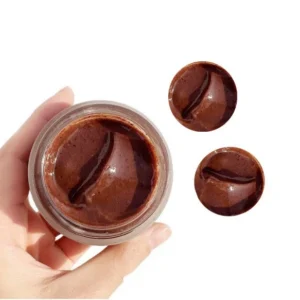
If your brand positions toward sensitive or frequent-use, a kaolin-forward system is usually the safer choice. If the positioning is “deep oil control,” a bentonite-forward blend reads better and delivers the visible matte finish that drives repeat purchase. Any private label clay mask brief should state the target skin type and application frequency before it states a texture preference, because a capable clay mask manufacturer will recommend a ratio from those two inputs rather than from a reference image alone.
Where clay sits against other mask formats
Clay is a rinse-off format, which puts it in the same family as cream and gel rinses rather than with sheet or hydrogel. That matters commercially: clay products fill into jars and tubes rather than sachets, and they compete on texture and finish rather than on ingredient novelty. Our sheet mask vs hydrogel comparison covers the film and texture differences on the other side of the category, and our peel-off vs rinse-off guide explains why clay delivers through removal experience rather than through a peel or a sheet.
A useful framing for a buyer: clay wins on oil control and mattifying finish, loses on hydration, and cannot be positioned alongside hydrating actives the way a sheet mask can. If your range needs both outcomes, a private label clay mask and a hydrating gel rinse are the natural pair — and that pairing is often more efficient for a buyer than forcing one formula to do both jobs.
Actives that work in a clay base
Clay is a fairly demanding carrier. Water-soluble actives are straightforward; oils and heavy silicones interfere with the gel structure and cause cracking or separation. That means the ingredient deck tends to be disciplined.
For soothing, centella, oat-derived extracts, and panthenol behave well. For brightening, low-strength niacinamide works but needs a pH-appropriate formulation. For exfoliation, both chemical options (glycolic, lactic, salicylic at lower strength) and physical options (fine jojoba or rice powder) get used — chemical exfoliating clay masks tend to position more premium, physical ones read as gentler. Our niacinamide and centella actives guide covers dosage guidance for the actives most often requested in clay bases.
Keep every claim cosmetic and cosmetic in scope: “draws out excess oil,” “leaves skin feeling matte and refined,” “helps decongest the look of pores.” Do not claim to treat acne, reduce sebum production medically, or alter skin function.
Packaging is the real decision in clay masks
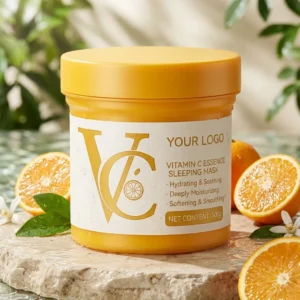
Clay has a packaging problem that other formats do not: it needs air protection. Kaolin and bentonite both pick up moisture, and once the formula dries unevenly in the jar, the texture is compromised for the rest of the shelf life. That pushes most private label clay masks toward airless pumps, or at minimum tightly sealed jars with a spatula rather than fingertip application.
Tube formats are possible but less common for a high-clay load because the product is too stiff for reliable tube filling. If a brand wants a jar, ask your supplier specifically how they control moisture ingress and whether they run a filling line that handles clay viscosity. That packaging decision is often the one that determines whether a private label clay mask arrives in sellable condition after three months on a retail shelf rather than in the first week. Our packaging guide covers the format trade-offs across jars, tubes and cartons, including the barrier questions that matter most for a clay product.
MOQ, sampling, and how to test the market
Clay is a friendly first category for a startup — formulas are stable, sampling is straightforward, and the fill volumes are smaller than a sheet mask. Many manufacturers will quote a first run in the low thousands of units. Two sample rounds are worth budgeting for, because clay texture is the single most common reason a private label clay mask formulation gets revised: too dry, too tight, not enough payoff.
If you want a structured way to evaluate suppliers before committing, our guide to low MOQ face mask manufacturing covers the screening questions that separate suppliers who genuinely support small runs from those who only advertise them.
Compliance and documentation
Clay masks ship under the same cosmetic frameworks as every other format in your range, and the documentation load is comparable: safety assessment, product information file or equivalent, INCI list on pack, batch COA, and MSDS/SDS for freight. Our custom face mask supplier documentation guide covers the import document set in detail. If your brand runs a vegan or clean positioning, check that the clay source and any accompanying botanicals are certified accordingly before you commit the artwork.
Screening questions for a supplier
Ask a candidate clay mask manufacturer five questions that reveal real capability. What clay systems do you hold in stock and which origins do you source from? How do you control moisture pickup during filling and storage? What viscosity range can your line actually fill — jar, pump, or tube? Do you run stability testing on the finished formula, or only on the base? And can you supply a finished sample with your own artwork before the bulk run?
Factory verification matters here as much as anywhere. Our guide to auditing a face mask factory walks through the on-site checklist, covering what to verify in documentation as well as on the floor. A supplier who cannot answer the moisture question for a private label clay mask will not answer it for you, and that is usually the question that decides whether the product survives shipping.
Adding clay to an existing range
If you already run sheet or hydrogel products, clay is the cheapest credible expansion into a new category because you keep the same documentation pipeline and the same buyer relationship. Start with one hero format — a single private label clay mask in an airless pump — prove the reorder rate, then decide whether the second SKU should be a stronger bentonite version or a gentler kaolin one. Our guide to taking a private label mask line from concept to shelf covers the sequencing question in more general terms.
Ready to scope a clay mask line?
Tell us your target market, your positioning (oil control versus gentle clarifying), and your expected volume, and we will recommend a clay system, a pack format, and a development timeline that fits your budget and launch window. Contact our team for a formulation brief, or browse our mask formulation guides for how clay compares to the gel, sheet, and sleeping formats already in the category.