Most writing about the facial mask maker market arrives as a paid research report: a headline market-size figure, a growth percentage, a few charts, and very little that a brand owner can act on next week. We take the opposite approach here. This article does not quote third-party estimates or publish growth numbers we cannot verify. Instead, it works from the sourcing patterns that show up in real B2B enquiries — which dosage forms buyers brief, which documents they now request before signing, which customisation steps actually add lead time — and converts each one into an OEM selection decision and a supply-chain action. If you are a brand owner, distributor, spa group, importer or marketplace seller building a 2026–2027 mask range, read the following four shifts as a working checklist rather than a forecast.
Why the Facial Mask Maker Market Rewards Specificity Over Scale
In the facial mask maker market, the meaningful change is granularity, not volume. Buyers used to open a conversation with “we need a sheet mask”. Today they arrive with a dosage form, a base material, an ingredient story, a pouch specification and a target shelf life already drafted. That shift is visible in how enquiries are worded: requests for botanical hydration bases, powder formats, turmeric and aloe clay variants, and collagen-focused sheet constructions have become specific enough to be handled as separate product briefs. A supplier who answers all of them with the same stock catalogue is telling you something important about how much of the work is done in-house.
For brand owners, the practical consequence is that a long catalogue is a poor qualification tool. It often signals a trading company assembling output from several factories, which lengthens every revision loop: the sample comes from one site, the filling happens at another, and the artwork correction has to travel through both. When a buyer asks for a viscosity adjustment or a different seal width, the answer takes days instead of hours.
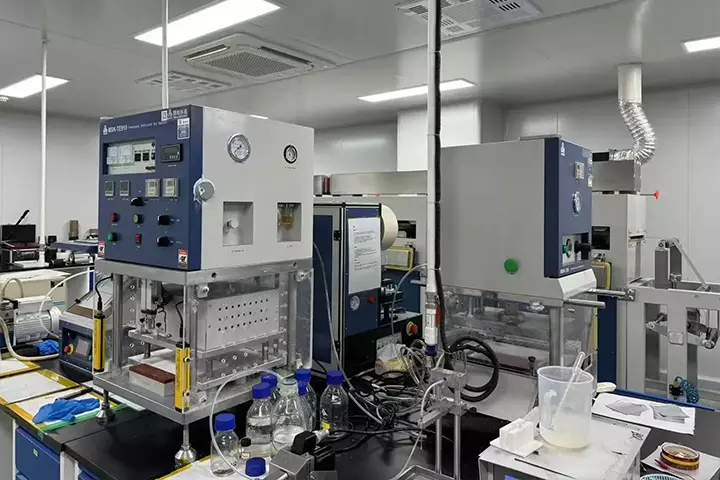
OEM selection: Ask which formats are manufactured on the supplier’s own lines and which are outsourced. Request the filling and sealing equipment list for the exact dosage form you want, and ask whether the same line handles both your hero SKU and your planned extensions. Ask who signs off on a sensory change and how quickly a revised sample can be produced. A factory that runs sheet, hydrogel, powder and clay in-house will shorten iteration more reliably than one that brokers each format to a different partner.
Supply-chain landing: Structure the range as a hub and spoke — one hero SKU with two or three format extensions sharing the same active story and outer carton design. This concentrates volume on a single base while still giving retail buyers a differentiated shelf set, and it keeps your first production run simple enough to validate properly. Minimum order quantity is Flexible / Customizable, confirmed after the formula, packaging and order plan are reviewed, so you can stage the extensions rather than committing to all of them in the first purchase order.
Shift 1 — Botanical Hydration Moves From a Marketing Claim to a Written Specification
Botanical and hydration-led masks have become a recurring brief across the facial mask maker market, but the buying question has changed. It is no longer “does it contain plant extracts?” It is “can the supplier document the extract, hold the hydration sensory profile consistent between pilot and bulk, and keep the wording within cosmetic boundaries in my target market?” That is a specification problem, not a storytelling problem, and it is where a surprising number of first orders go wrong.
Aloe, centella and multi-hydration botanical bases behave differently in viscosity, essence load and pouch compatibility. A formula that feels right in a laboratory sample can drift once it is filled at speed, particularly when the substrate changes between a pilot run and a production lot. A buyer who approves the sample on feel alone may receive a bulk shipment that is technically the same formula but presents differently on the skin, which is exactly the kind of discrepancy that generates returns and bad reviews.
OEM selection: Request a written formula brief naming the extract, its supplier, the preservative system and the intended viscosity range, then ask for the pilot-to-bulk consistency protocol — including the retained sample and the comparison method used at release. Confirm which claims the factory will print on artwork and which it will not. Our herbal hydration mask manufacturing guide covers botanical bases, low-MOQ planning and factory-direct OEM/ODM in more detail, including how the same active story can be extended across formats without reopening the whole formulation.
Supply-chain landing: Lock the substrate and the pouch at the same time as the formula, because a change to either one reopens the essence-load calculation. Ask for MSDS and COA per batch and confirm stability and compatibility data before artwork is released, not after. Planning the documentation alongside the sample removes the most common cause of a delayed first shipment, and it gives your regulatory or retail onboarding team a file they can work with while production is still running.
Shift 2 — Powder and Clay Formats Are Now Range Extenders, Not Novelties
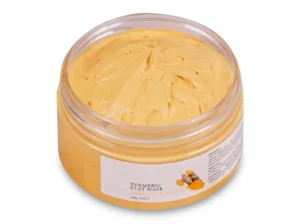
Alternative dosage forms have moved to the centre of range planning in the facial mask maker market. Powder masks solve a real logistics problem: they remove water from the shipped unit, extend shelf life and reduce freight weight, which matters for cross-border programmes and marketplace fulfilment where dimensional weight is a direct cost. Clay formats answer a different need — a visible, sensorial weekly-use ritual that photographs well and gives a range built around daily hydration sheets a second usage occasion.
Both formats create distinct factory-side requirements that a sheet-mask qualification does not cover. Powder needs controlled particle size, dust management on the filling line, blending homogeneity and a mixing instruction a consumer can follow without error. Clay needs a rheology profile that stays stable in a jar or tube and does not separate during temperature cycling in transit, plus a clear position on how exfoliating variants are graded so the sensory experience stays consistent from batch to batch.
OEM selection: Handle these as separate qualifications rather than variations of an existing sheet mask relationship. For powder, ask about milling, blend uniformity and sachet or jar filling accuracy; our powder face mask OEM guide sets out the formulation, packaging and private label options. For clay, ask about the base (kaolin, bentonite or a blend), the aloe or botanical phase, and the grading of exfoliating variants; our turmeric and aloe clay mask guide documents the aloe, mature-skin, teen-skin and exfoliating variants buyers most often request.
Supply-chain landing: Powder and clay are the easiest formats to stage as a second purchase order, because they share the outer carton and brand system with the hero SKU while using different primary packaging. Keep the first run small, validate the mixing or application instruction with real users, then scale once the reorder signal is clear. MOQ remains Flexible / Customizable across both formats, which makes a two-stage launch commercially realistic for a new brand.
Shift 3 — Compliance Documentation Has Become a Pre-Order Selection Criterion
Across the facial mask maker market, documentation has moved upstream. Importers and retail buyers increasingly ask for the certificate set and the batch-file structure before they discuss price, because a missing file blocks a shipment at the border or stalls a retailer’s onboarding. The cost of discovering a gap after production is far higher than the cost of specifying it in the brief — a container held at customs is a working-capital problem, not a paperwork inconvenience.
The practical list is stable: ISO 22716 and GMPC or GMP for the manufacturing system, MSDS and COA per batch, and the responsible-party and notification paperwork required by the destination market. What varies between suppliers is whether the factory can produce these on its own letterhead, on time, and matched to the exact SKU you are shipping. A generic certificate for a different site, or a COA with no batch reference, is of little use when a buyer’s compliance team reviews the file.
OEM selection: Verify the certificate scope, the site address on the certificate, and the issue and expiry dates — not just the logo on a presentation deck. Our ISO 22716 standards guide lists what B2B buyers should verify, and our GMPC red-flags guide covers the failure patterns worth screening for. Then ask for a sample document pack against one real SKU. A supplier who can assemble it in a day is usually one who has done it many times, and that turnaround is a better capability signal than any certificate on its own.
Supply-chain landing: Build the document pack into the purchase order as a delivery condition, with the file list, the batch reference and the responsible owner named in writing. Keep all product wording within cosmetic positioning — hydration, soft-feel, refreshing, a comfortable finish — throughout artwork, listings and sales materials. This is a product-positioning discipline rather than a regulatory shortcut, and it prevents the expensive last-minute rework that comes when a claim has to be pulled from already-printed cartons.
Shift 4 — Speed to Shelf Is Won or Lost in Sampling and Packaging
The most common schedule slippage in the facial mask maker market has little to do with production capacity. It comes from an unstructured sampling loop and from artwork decisions made too late. A brand that approves a formula before the pouch is chosen will typically re-test after the packaging changes, because essence load, seal integrity and shelf life are all packaging-dependent. Each unplanned round adds days, and the launch date moves without anyone having made a single overt decision to move it.
A disciplined programme runs sampling within 3–7 days and bulk production in roughly 7–15 days depending on customisation. Those windows only hold when the brief is complete at the start: dosage form, active story, substrate, primary packaging, outer carton, print method and claim wording. When one of those is still open, the clock effectively restarts each time it is settled.
OEM selection: Ask how many sample rounds are included, who signs off on the sensory profile, and whether the factory keeps a retained sample from the approved pilot for comparison against the bulk lot. Confirm whether packaging is produced in-house or by a nominated converter, and who owns the tooling for a custom shape or a custom-fit tray — tooling ownership matters if you ever want to move production. Our sampling and lead-time guide sets out how to shorten time-to-market without skipping validation steps.
Supply-chain landing: Choose the primary packaging — sachet, jar, tube or carton — before the first sample is filled, and freeze the dieline before bulk. Our packaging customisation guide compares pouch, jar and carton options by retail use case and printing method. Run artwork approval in parallel with the stability check rather than after it, and keep a single version-controlled specification sheet shared with the factory. That one habit removes most of the avoidable back-and-forth that turns a six-week plan into a ten-week one.
Common Questions (FAQ)
Q1: What minimum order quantity should I plan for a new mask range?
A: Flexible / Customizable. The final quantity is confirmed once the formula, packaging format and order plan are reviewed, which lets you stage a hero SKU first and add format extensions in a later order.
Q2: How long do sampling and bulk production take?
A: Sampling typically runs within 3–7 days; bulk production takes around 7–15 days depending on the level of customisation. Both windows assume a complete brief at the start — changes to substrate or packaging reopen the validation loop.
Q3: Which certifications and documents should I verify before ordering?
A: ISO 22716, GMPC or GMP for the manufacturing system, plus MSDS and COA per batch and the destination-market notification paperwork. Verify certificate scope and site address, and request the document pack against a real SKU rather than a generic sample.
Q4: Is a facial mask maker market report useful to a first-time buyer?
A: A third-party forecast rarely changes a first purchase order. What changes the outcome is a short list of verifiable factory capabilities: formats run in-house, documentation turnaround, sampling rounds and packaging ownership.
Get a Quote / Request Samples
Trends only matter when they turn into a range that ships on time. If you are planning a 2026–2027 mask line, send us your dosage form, target active story, packaging preference and destination market, and we will come back with a formula route, a sampling schedule and a document checklist you can act on. We support OEM and ODM programmes, private label packaging and staged order plans for brand owners, distributors and spa groups, with MOQ kept Flexible / Customizable. Review our OEM and private label services to request samples, a tailored quotation, or a sample-first development plan.