Launching your own branded face mask range has never been more achievable for B2B buyers, distributors, and spa channels. Partnering with an experienced private label face mask manufacturer lets you bring a finished, branded product to market without building a formulation lab or a production line from scratch. Instead of carrying the full burden of R&D, quality control, and regulatory documentation, you focus on brand, channel, and growth while the factory handles the technical backbone. This guide walks overseas buyers through the practical steps of starting a private label face mask line — from positioning and formulation to packaging, compliance, and time-to-market — so you can move from concept to shelf with fewer surprises and a clearer quote request.
Why Private Label Face Masks Are a Smart Entry for B2B Buyers
For a new skincare brand, masks are one of the easiest categories to launch. They are single-function, giftable, and simple to explain to end customers, which shortens the path from listing to first reorder. Working with a private label face mask manufacturer reduces upfront capital risk because you do not need to fund original formulation research or certify your own facility. The factory already holds the manufacturing licenses, the documented processes, and the export paperwork that overseas buyers need. That shift lets a small team test a market with a compact SKU set before committing to a wider range.
Masks also travel well across channels. The same sheet mask formula can serve an Amazon private label seller, a TikTok beauty account, a hotel amenity program, or a professional spa — with only the packaging and label language changing. That flexibility is exactly why masks are often the first product a new B2B brand puts into production.
Define Your Product Positioning Before You Source
Before contacting any supplier, write down who will actually use the mask and where it will be sold. A mask positioned for “sensitive skin, fragrance-free, clinic aftercare” is formulated, packaged, and priced very differently from a “brightening night mask for Gen-Z TikTok” product. Buyers who skip this step tend to receive generic quotations that do not match their channel, which wastes both sampling time and freight budget.
Three questions should anchor your brief: (1) What skin benefit is the hero claim — hydration, brightening, soothing, or anti-aging feel? (2) What is the sales channel — e-commerce, retail, salon, or export distribution? (3) What is the target retail price band, which in turn sets the formula and packaging cost ceiling? With these answers, a manufacturer can recommend a realistic format and essence concentration instead of a one-size-fits-all pitch.
Choose the Right Mask Format and Formulation
A reliable private label face mask manufacturer will offer multiple mask formats so you can match the product to the promise. Sheet masks remain the volume leader: thin, breathable carrier cloths saturated with essence, ideal for daily hydration and easy to pack in sachets. Hydrogel masks carry a higher perceived value and a cooling, second-skin feel that suits premium and eye-area products. Sleeping masks and leave-on formats extend wear time and fit night routines, while peel-off masks serve the deep-clean and pore-refining angle.
Formulation direction matters as much as format. Hyaluronic acid drives hydration storytelling; niacinamide and centella support brightening and soothing positioning; collagen and plant extracts anchor “firming” and “natural” claims. Keep every claim cosmetic and market-compliant — avoid clinical or medical language. A good manufacturer reviews claim wording against your target market before proofing, which protects you from takedowns and customs issues later.
What to Look for in a Private Label Face Mask Manufacturer
When you evaluate a private label face mask manufacturer, audit three things before signing: formulation control, production consistency, and export readiness. Formulation control means the factory can adjust essence concentration, fragrance strength, and texture (gel, cream, hydrogel, rinse-off) rather than only shipping a fixed stock recipe. Production consistency means inline and final inspection, batch traceability, and stable filling and sealing so reorders match the approved sample. Export readiness means the documents — MSDS, COA, ingredient lists, and market-specific files such as CPNP for Europe — are produced as standard, not as a paid afterthought.
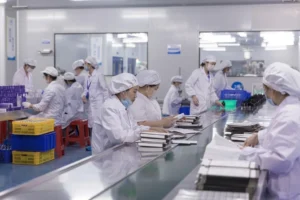
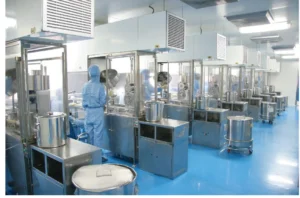
Ask for a virtual or on-site factory tour, request reference SKUs in your category, and confirm the minimum run per format. The goal is evidence that the partner has shipped your type of product to your type of market before, not just that they answered an inquiry quickly.
Certifications and Compliance Buyers Must Verify
The right private label face mask manufacturer holds ISO 22716 and GMPC (or GMP) certifications and can show the audit certificates, not just mention them in a brochure. ISO 22716 governs cosmetic Good Manufacturing Practice for the full production chain; GMPC confirms the site runs a controlled, documented process. For buyers exporting to the EU or Middle East, CPNP registration and ingredient compliance are part of the conversation, and a prepared manufacturer shortens your launch timeline considerably.
Do not treat certifications as a box to tick. Request the actual certificate numbers and validity windows, and confirm they cover the specific site producing your order. A certificate for a sister factory does not cover your line. This single check removes most of the “looks cheap but fails audit” risk in the category.
Packaging Customization: Pouch, Jar, Carton
Packaging is where your brand becomes visible on the shelf, so treat it as a design project, not an afterthought. Single sachets keep unit cost low and suit trial and subscription models. Jars and tubes support premium leave-on masks and repeat-use positioning. Boxed pouch sets and display cartons fit retail and gifting. Film material, pouch size, cap finish, label substrate, and carton marks are all reviewable during proofing, and multilingual labels (English, bilingual, or market-specific) are handled before mass production.
Give the manufacturer your logo and claims early so the proof reflects the real artwork. Buyer-supplied artwork should be checked against local labeling rules before printing, because a mislabeled carton is expensive to correct after a container is packed.
MOQ, Sampling, and Lead Time
A flexible private label face mask manufacturer supports low trial MOQs so you can validate the market before scaling. Sample orders typically ship within a few days once the formula and packaging are confirmed, and bulk production follows on a published lead time that depends on customization depth. Confirm the sampling fee policy, whether free samples apply above a certain order value, and how freight is handled for small versus container-scale orders.
Speed-to-market is a competitive advantage, not a luxury. Buyers who lock formula, packaging, and label language in one brief usually cut weeks off the timeline compared with those who iterate mid-production. Treat the sample as the contract: if the approved sample feels, smells, and performs right, the bulk run should match it.
Common Questions
Q1: What is the typical MOQ for private label face masks?
A: Flexible / Customizable — confirmed after we review your formula, packaging, and order plan. Trial quantities are available so you can validate the market first.
Q2: How long do sampling and production take?
A: Sampling is usually completed within a few days after brief confirmation; bulk production follows on a published lead time that scales with customization. We share the timeline in the quotation.
Q3: Which certifications should I verify before ordering?
A: ISO 22716 and GMPC (or GMP) as a baseline, plus market-specific files such as CPNP for Europe. We provide MSDS and COA per batch.
Q4: Can the formula and packaging be fully customized?
A: Yes. Texture, essence concentration, fragrance, sachet or jar format, label language, and carton marks are all reviewed during proofing so the finished product matches your brand.
Get a Quote or Request Samples
Choosing the wrong private label face mask manufacturer is the fastest way to burn a launch budget on mismatched stock and rework. The efficient path is a short, specific brief: target market, channel, hero benefit, preferred format, and approximate quantity. With that, our team can return a realistic quotation, a sample plan, and a production timeline in one round.
Explore our private label services and OEM/ODM capabilities to see supported formats, or review the sheet mask and hydrogel mask lines for formulation starting points. For compliance details, see our certifications page, and when you are ready, contact our team to request samples and a custom quote. More buying guides are in the blog.